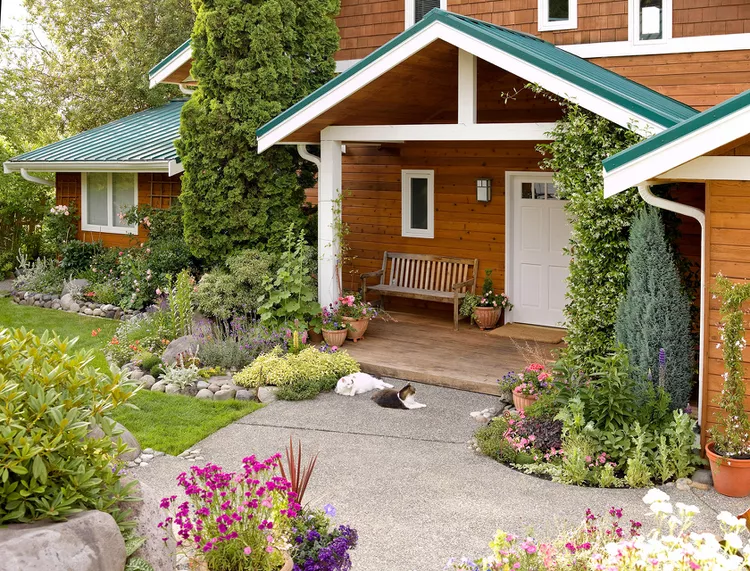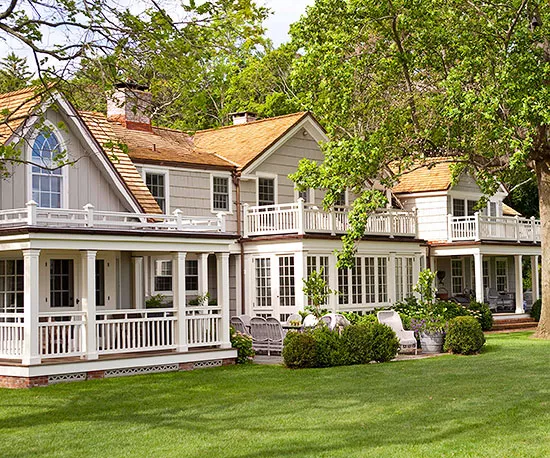
The builder's bit of lawn, two trees, and few foundation shrubs fall far short of most homeowners' dream landscape. To set your yard apart, invest in streetscaping to add to your home's current and future value. Use our tips for how to landscape front yards to enhance the view from the street and give a sense of individual pride and accomplishment that will yield results for decades.
Assess Your Front Yard
When planning how to landscape a front yard, the first thing to do is recognize your bias. The satisfaction of returning home and seeing your front yard from inside can skew your feelings about how it looks to the public. For a clearer view, walk down the street, then walk back. Then, do the same in the other direction. You can also approach your house slowly from each way in your car.
Does your house blend with those nearby? Is it appealing? Distinctive? Does it sit well on the site or look out of place? Does it need stronger horizontal or vertical lines? Does it nestle among the trees? List all its virtues and shortcomings.
When you go to other houses, take note of the convenience of their entryways. For example, can you easily see where to turn into the drive? Is the drive wide enough to open your car door and get out without stepping on plants or grass? Can you easily tell which door to approach? Are walks and steps easily negotiated?
Use what you learn from these activities to choose front yard landscaping ideas with trees, shrubs, flowers, grass, and ground cover. Then, you'll also need to plan for the verge (the strip between the sidewalk and the street). Also, consider your yard's structural needs—walkways, stairs, driveway, stoop, edgings, and fences.
Hardscaping and Landscaping
The architectural features of your yard will be the most expensive and permanent.
You may want to plan them in stages: the driveway first, attractive and durable stairs and walkways next, and a porch or fence the year after. Select materials that will add to your landscape, not detract from its harmony. Plantings are easier to install and change, but you'll want to put them in the right places, so they can quickly be part of your design.
Trees, Shrubs, and Ground Covers
Trees, shrubs, and ground covers are long-term purchases that increase in size and value and don't need much maintenance. If you want fresh herbs, fruits, and vegetables, you can use edible plants to add to your landscape.
Flowers
Flowers are a simple front yard landscaping idea that needs some care and often requires replanting. Still, they can fill in the gaps until your woody plants gain enough size to stand alone. Annuals—like kochia, four-o'clock, strawflower, impatiens, moonflower, and angel's-trumpet—and perennials—like peony, bee balm, and hosta—can substitute for shrubs the first year or two.
Lawn
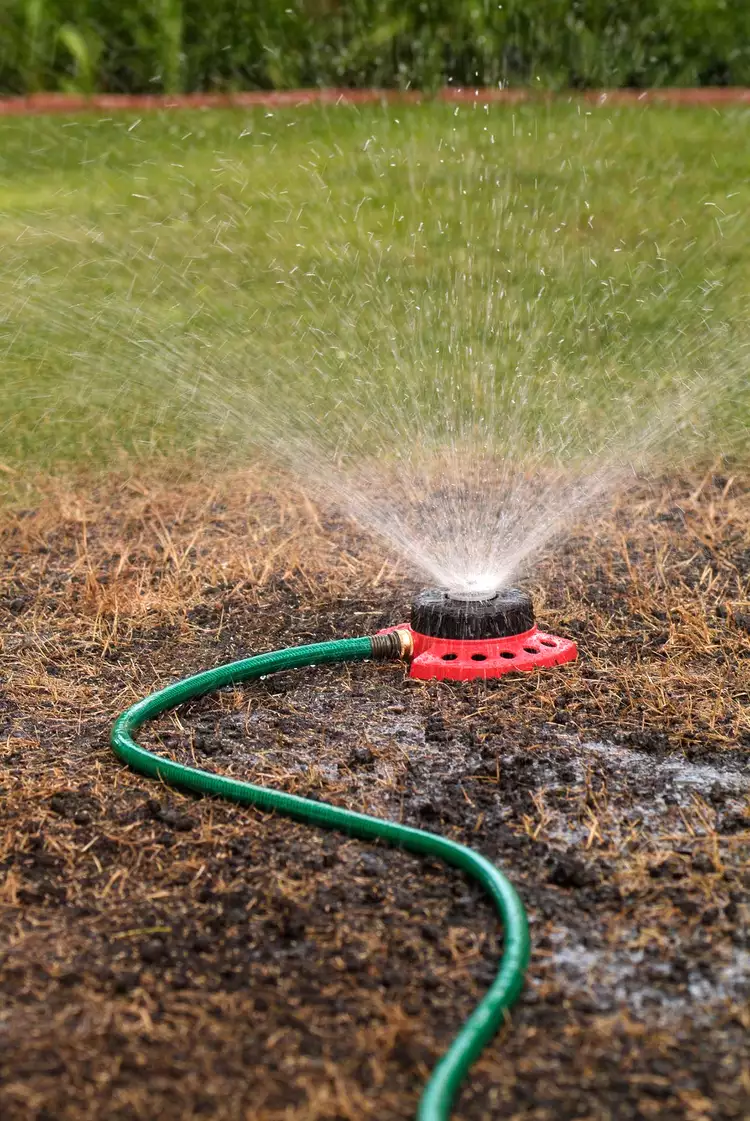
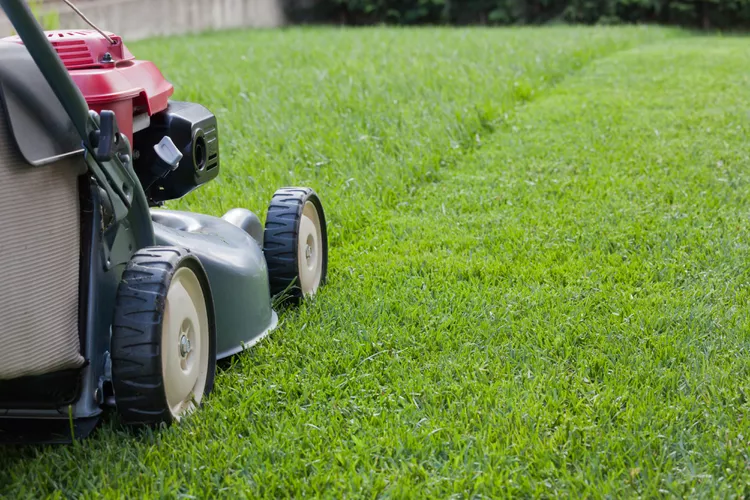
Lawns take the most resources, work, and equipment of any aspect of landscaping. To conserve natural resources and human energy, consider alternatives to lawns, especially in regions with inadequate rainfall. One idea for how to landscape front yards is to use mulch or ground covers for islands around trees and shrubs if your property is too large for constant mowing and watering. Fence or mark off an area for turf and use the rest for meadows, pasture, or woodland.
Plant Trees for Impact
Trees (and larger shrubs) are the first components to consider when planning how to landscape front yards. A framed view is often much more inviting than an open view. Consider the simple landscaping idea of planting taller trees on either side of your house and one (or more) behind it. Trees give the yard and house a look of permanence and soften the second story or roofline against the sky. Plant them in the front yard if your budget allows for only one or two mature trees.
Besides providing framing, trees and larger shrubs—and the buildings—make up the masses in the landscape. Choose and place them for the seasonal color interest for outline, shade, and energy control. Harmonize the shapes of the plants—round, pyramidal, weeping—with each other and the structures. Give visual relief by carefully varying leaf size and shape relative to the textures of structural materials. Trees and shrubs also are good for marking boundaries and separating functional areas.
Add Accent Trees
To add beauty and additional shade to a front yard, carefully situate accent trees between the street and the house. Accent trees make such a lasting impression that you'll find you identify certain homes by the dogwood or Japanese maple in the front yard. When selecting accent—also called specimen or ornamental—trees, use reliable native types with good habits and few pest problems.
Raised Planting Beds
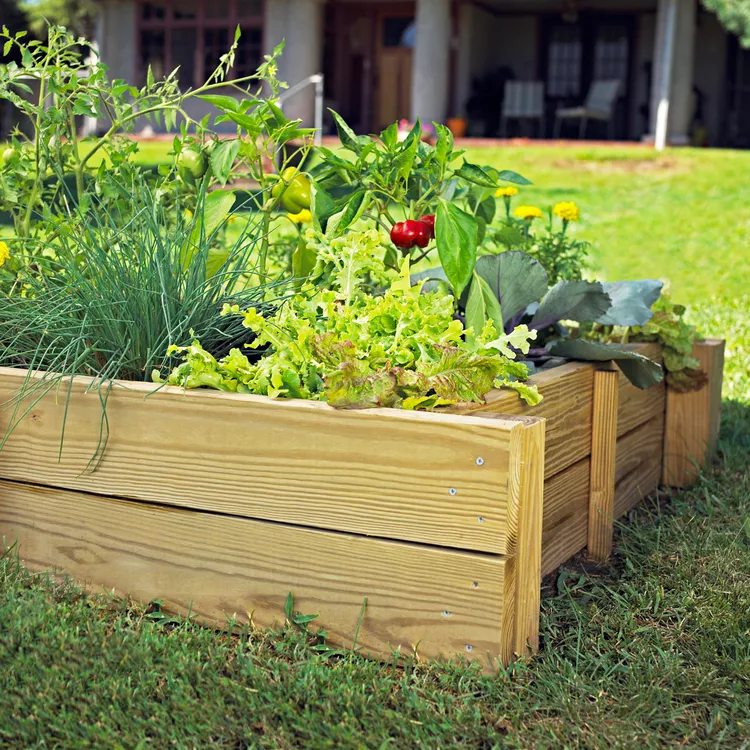
Raised planting beds are often used instead of or together with foundation plantings. Build bottomless planting beds deep enough to provide ample soil for root growth and to ensure the bedding soil mixes with the soil below. Because soil in raised beds dries out more quickly than in the ground (and because few plants can withstand full sun plus the heat reflected from house walls), place beds in spots that receive shade for part of the day.
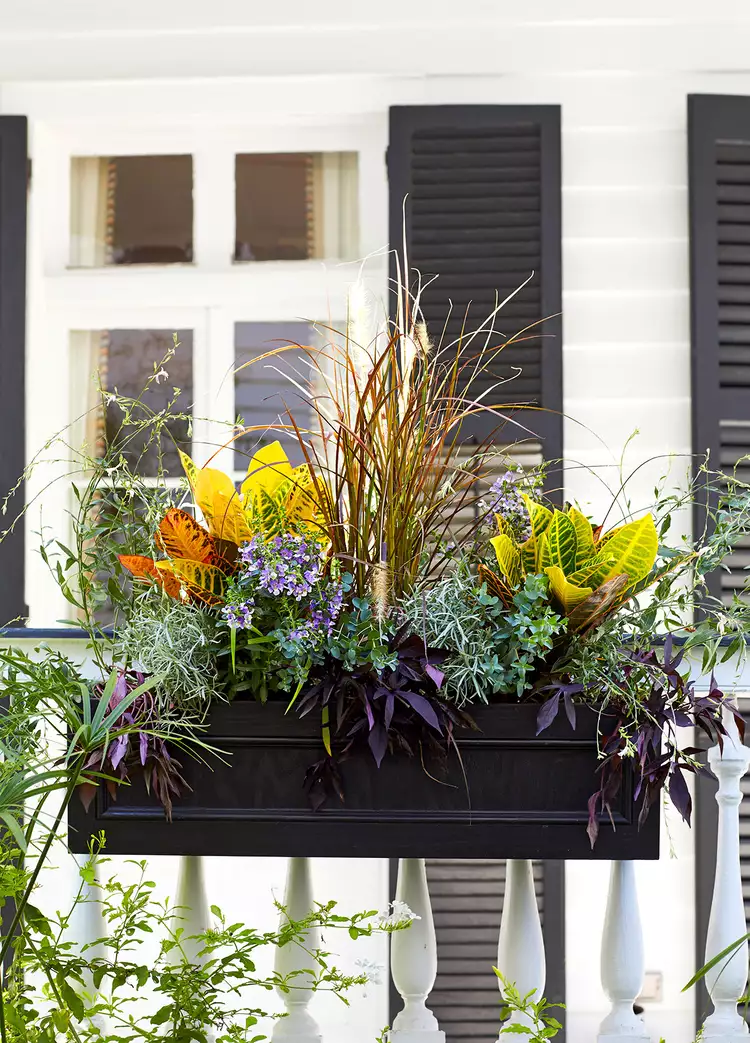
Plants here have star billing. Be sure they are hardy, are of the appropriate ultimate size, and have a tidy, season-long appearance. Choose dwarf evergreens, flowering shrubs, fruit trees, perennials, or bulbs. For the most profusion and longest season of bloom, rely on annuals. Cascading petunia, vinca, and asparagus fern look lovely hanging over a bed's edges. Leave some edges clear, though, for sit-down gardening or just sitting down.
The old rule that the front yard is for the public and the backyard is for fun and family is sometimes better broken. Is your front yard the sunniest in a cool climate? The coolest in summer? On the south side, where tender plants and fruit can best survive the cold? The most significant part of your yard? Then reclaim some or all of it for private family use. Simple landscaping ideas like a wall, fence, or sometimes only a small screen can give you the privacy you need.
Foundation Plantings
In the past, plants were set where the house meets the ground to hide foundations and first-floor basements. Today, these so-called foundation plantings are often inappropriate and widely misused. Builders put in plants with enough size but little character, and they can soon outgrow their usefulness. Many houses come with a surrounding cloud or a border of stiffly spotted evergreens that destroy a house's style.
Plants near the house are essential only to soften its angles and to help it blend in with its surroundings. Concentrate on the entire setting, not just the foundation line. Your plantings here should be simple and dignified. They should be appropriate in scale, enhancing rather than hiding the house. You won't see these plants from inside except perhaps a little by the windowsill, so don't waste your beauties here.
Planning Your Walkway
The best plan for a walkway varies from yard to yard. Evaluate your yard and keep these things in mind before laying down any concrete, pea gravel, or sand.
- Follow natural access patterns when laying out walkways. If you don't, children or dogs will carve their own paths right through your prize petunias. Though perhaps less charming, a straight path is the shortest, least expensive, and sometimes the most sensible.
- Use curves, jogs, or steps only where there is a reason, not just to meander. Combine practicality with visual appeal by designing walkways at least 36 inches wide. If scale permits, 42 to 54 inches is better so two people can walk together. For an illusion of greater or lesser distance, widen one end. A little extra width at curves is pleasant.
- Ideally, walkways should slope 1 to 5 percent, never more than 10 percent. Use curves, jogs, steps, or ramps if the entry is steeper. Let plants make the journey enjoyable.
- Make walls, fences, or hedges near walks less than 2 feet so people can swing their arms or carry packages without feeling crowded. Between the walk and taller verticals, a buffer zone of ground cover, lawn, flowers, or mulch at least 2 feet wide gives more room for movement.
- Loose materials like tanbark or wood chips are fine for natural garden paths farther away from the house, but they may result in too much tracking in the home if used for the front yard.
Plan a Functional Entryway
When planning how to landscape a front yard, pay particular attention to making your home's entrance clear and inviting. Use plants and structures to lead people where you can greet them most gracefully. You can also dramatize the front door with a lamppost, an accent shrub, a trellis to block the rain or wind, or pots of geraniums.
Be sure knockers and bells are easy to find, at a convenient height, and not inaccessible behind a locked screen door. The best stoops are large enough for two people to stand on with some cover from the elements and for doors to swing open. A bench here is a great help.
Driveways, too, should be readily visible. A simple, low planting can mark the turn. If trees or shrubs obstruct the view, remove them for safety's sake. Where curves or slopes are involved, the placement of the driveway on one side of the yard or another can increase visibility.
For night arrivals, lighting should mark the turn from the road to the drive, from the drive to the walk, any curves or steps, and the front door.
Your Guide to Front Steps
Make steps as wide as the walks they connect. The steps should be emphatic and noticeable. A plant accent can help. So can a change of texture. Never use just one step. If the slope is that slight, use a ramp. Three steps are the ideal minimum, though two are acceptable.
Check regularly that your steps are safe and not slick in snow or rain. Try to create at least one entrance without steps into your house for wheelchair visitors or possible future or emergency use. Or make conditional plans for a ramp, avoiding any plantings that would interfere.
Using Edges and Borders
Edgings give your yard an essential and clean outline and dramatic form, texture, and color contrasts.
For permanent edging:
- Build small concrete curbs
- Set bricks on edge, on end, or diagonally
- Lay landscape timbers
- Stand flagstones or tiles on edge
- Install ready-made borders available in garden centers
- Metal or rubber strips are inexpensive options.
Borders of flowers, bulbs, or ground covers can be used with, or instead of, other edgings. Use the plants with the proper ultimate spread and an attractive year-round appearance. Keep plants far enough away to avoid overgrowth.
Creating an Attractive Front
Every house facade and site has visual assets and liabilities. The well-done front yard highlights the appealing points and masks the poor ones.
All the elements of good design come into play as you decide how to landscape a front yard. But don't be put off by the aesthetic terms—balance, scale, unity, and the like—used by designers. All are essentially a matter of common sense. If a scene pleases your eye, then it's probably well-designed.
Choose a Theme or Style
If your house needs or will adapt to your desire for a special theme garden like colonial, cottage, Asian, or Mediterranean, the look must begin in the front yard. Themes are successful only if you unify all the garden aspects carefully.
You'll also need to determine if your preference is for, and your site demands, a formal or informal landscape. Formal garden settings include strong geometric lines and architectural features, clipped hedges, and uniformly shaped plants and beds. Free-flowing, natural-looking elements mark informal designs. Generally, informal home styles and sloping land require less rigid landscapes. Formal houses and flat land can be treated either way.
Balance Landscape Elements
To achieve balance in a landscape, try to position elements, so they give equal weight—through size, color, texture, or other aspects—to each side of a scene. The formality of the weighting is dictated by the style of the house and personal preference. Symmetrical houses often look best when each feature and plant is duplicated on the opposite side of a front walk (as long as the walk isn't too long or too narrow). However, most houses are asymmetrical since they have only one garage or drive. In this case, balance is more subtle. Perhaps a tall tree belongs on the side opposite the driveway.
Pay Attention to Size
Achieving a pleasant scale—or keeping elements in proportion to each other—may take time since plants need to grow before you can be sure. Choose plants that will complement your home's size at maturity and some that will grow quickly. Don't let anything dwarf your house.
Simple Front Yard Landscaping Ideas are the Best Options
The design principles of unity and simplicity often go together.
Several plants of the same color and kind have a more significant impact on a landscape than one of several types. Use only enough variety to sustain blooming and add visual interest.
If you want more types of plants, say for continual harvests of many kinds of fruit, try combining plants with similar or at least compatible shapes, textures, and foliage or bloom colors.