How to Plant and Grow Squill

29.6K
2.7K
692
2025-10-18
How to Plant and Grow Squill

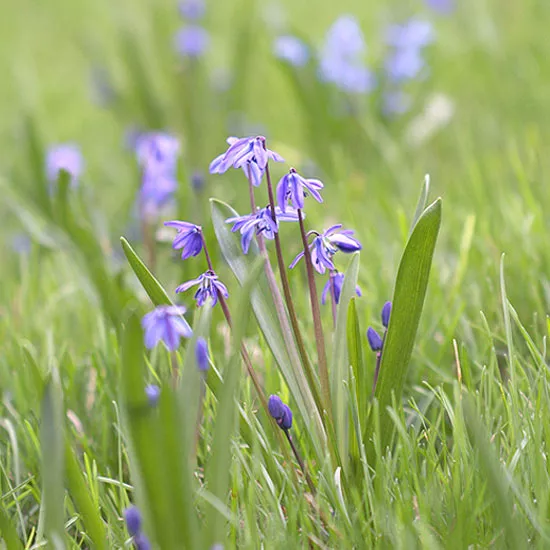
Squill or Siberian squill, also referred to by its botanical name, Scilla, is a spring bulb that announces a new garden season with bursts of dark green grass-like foliage. The leaves seem to emerge overnight in early spring. The tufts of foliage are quickly followed by arching flower stalks that support one to three nodding blue or white flowers. These tiny blossoms with a sweet fragrance decorate the garden for two to three weeks and, when planted in large masses, catch the eye from a distance.

The flowers provide a welcome early-season nectar source for bees. Squill is toxic to humans.

Squill Overview

Genus Name Scilla sibirica
Common Name Squill
Plant Type Bulb
Light Part Sun, Sun
Height 3 to 6 inches
Width 3 to 6 inches
Flower Color Blue, White
Foliage Color Blue/Green
Season Features Spring Bloom
Special Features Fragrance, Low Maintenance
Zones 3, 4, 5, 6, 7, 8
Propagation Division
Problem Solvers Deer Resistant

Where to Plant Squill

Squill thrives in locations with light shade or dappled shade and well-drained soil with a neutral pH. The areas below deciduous trees and shrubs and around the base of perennials are ideal planting locations for squill because the bulbs complete their life cycle before the larger plants leaf out and limit their sunlight.

For the most eye-pleasing effect, plant squill in drifts of no fewer than 100 bulbs. Plant bulbs along walkways, interspersed with perennials, and in herb or rock gardens.

How and When to Plant Squill

Squill, like most spring bulbs, are planted in fall as soon as the soil has cooled down to around 55 degrees F, which is usually the case after the first couple of fall frosts.

Plant squill bulbs with the pointed growing tip facing upward. Plant bulbs so the base of the bulb sits 5 inches deep in the soil. Space bulbs 2 inches apart, or plant 20 bulbs per square foot. Water the bulbs after planting and again in late fall if there is no rain.

Squill Care Tips

Squill are low-maintenance perennials that will add color to your spring garden for many years to come.

Light

Select a location that provides light shade or dappled sunlight after surrounding trees and shrubs leaf out.

Soil and Water

The soil should be well-drained, with a pH around 7.0. Sandy loam is ideal. Like all flower bulbs, squill will do poorly in heavy, dense soil with high clay content and poor drainage.

Temperature and Humidity

Squill is a very hardy plant that withstands winter temperatures as low as Zone 3. On the other hand, summers above Zone 8 are too hot and winters too mild to grow them.

The bulbs have no humidity requirements; by the time the summer weather turns humid, they have entered their summer dormancy so the foliage won’t be affected by humid weather.

Fertilizer

There is usually no need to fertilize squill. At the most, apply a low-nitrogen, high-phosphorus bulb or granular fertilizer when the foliage emerges.

Pruning

After the bloom, the foliage directs energy into the bulb for the following season; it's important to let the foliage stand until it begins to show signs of dormancy. Leave the foliage in place until it begins to turn yellow and wither. If you planted squill in an area that you typically mow, delay the first mowing of the season. For the first mowing, set the mowing height to at least 4 inches to limit the damage to individual squill leaves that have not yet reached dormancy.

Potting and Repotting Squill

It is not recommended to grow squill in containers unless it is to force them for early blooming. When grown as perennials, the bulbs need consistently cold winter temperatures to develop good root systems and grow foliage and flowers in the spring. In pots, unlike in garden soil, the bulbs are exposed to significant temperature fluctuations and cycles of freezing and thawing, which harm the bulbs.

Pests and Problems

Squill is free of serious pests or diseases. Deer and rodents show no interest in it.

How to Propagate Squill

Squill readily multiplies on its own, either through bulb offsets or ants carrying the seeds (that's why you might find squill in faraway corners of your yard).

The common method to propagate squill is by division when the patches get too crowded. As the foliage dies back after the bloom, mark the location so you know where to dig the bulbs in the fall. Use a shovel to dig up the bulbs. Discard any dead and damaged bulbs and replant the remainder in a new location as described under How and When to Plant Squill.

Types of Squill

Scilla siberica ‘Spring Beauty’

This cultivar is the most popular squill. It is slightly larger than the species, longer blooming, and the flowers are deeper blue. Zone 3-8

Scilla siberica alba

The white variety of Scilla siberica has loosely formed, bell-shaped flowers on 3- to 5-inch stems. Zone 3-8 

Scilla bifolia rosea

Also known as alpine squill, this early-blooming squill has soft pink, lightly scented flowers, Zone 4-8

Scilla mischtschenkoana

Multiple (up to four) flower stems with show light bluish-white flowers set this scilla species apart. It was formerly known as Scilla tubergeniana. Zone 4-8

Squill Companion Plants

 Crocus

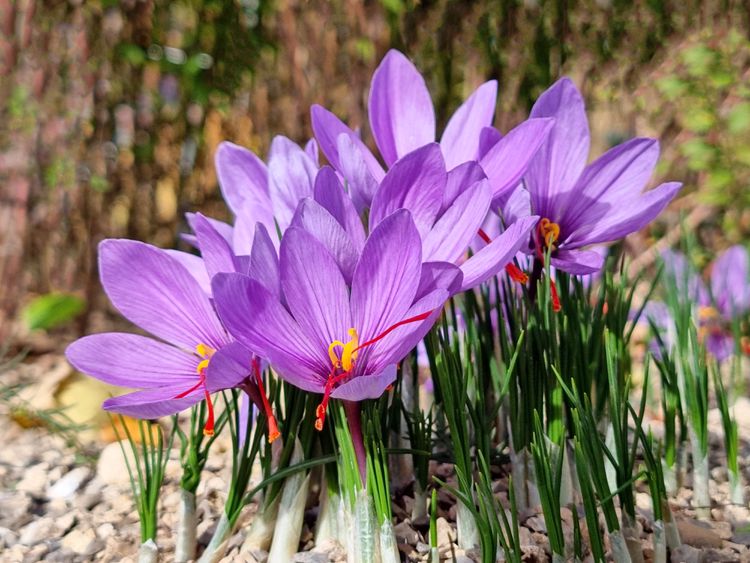
When crocuses pop out of the ground, sometimes through snow, you know winter is coming to an end. Large sections of the petite, ground-hugging flowers planted beneath deciduous trees create a spectacular sight. This plant also possesses the power to jazz up rock gardens, brighten the ground in front of shrubs, and line sidewalks with splashes of color. Zone 3-8

Creeping Phlox

Phlox subulata is a low-mounding variety of phlox that is covered with bright flowers in spring. It forms short, thick cushions of finely textured, stiff foliage. Because it seldom tops 6 inches in height, it fits in nicely with low-growing spring bulbs such as squill. Zone 3-8

Daffodils

For the earliest daffodils to brighten up the landscape with their golden-yellow blooms, choose 'Rijnveld's Early Sensation' or the early, miniature yellow 'Tete a Tete'. Daffodils are sturdy plants that bounce back even after late snow showers. Once you have planted daffodils, they'll return year after year and even multiply with minimal care. Zone 3-8
Frequently Asked Questions

  • Is squill invasive?

    Squill has escaped from residential gardens into natural areas in the Northeast, Midwest, and Great Lakes Region of the United States and Eastern Canada. With its rapid spread, it has the potential to outcompete native species.

  • Where is Siberian squill native to?

    Despite its botanical name, Scilla siberica, the plant is not native to Siberia but to eastern Central Europe, the Caucasus, the Balkans, and Turkey. It was introduced to North America as an ornamental in the late 1700s.

Sources
Better Homes & Gardens is committed to using high-quality, reputable sources—including peer-reviewed studies—to support the facts in our articles. Read about our editorial policies and standards to learn more about how we fact check our content for accuracy.
  1. "Scilla." North Carolina State University Cooperative Extension.

Article "tagged" as:

Related Article

The 12 Best Terrarium Plants to Grow in Your Miniature Garden
13.2K
794
349

The 12 Best Terrarium Plants to Grow in Your Miniature Garden

These small, humidity-loving terrarium plants are perfect for growing in mini indoor gardens.
How to Grow and Care for Living Stones
19.4K
1.9K
388

How to Grow and Care for Living Stones

Find out how to grow living stones, unique miniature succulents that look like pebbles. This guide covers how to care for living stone plants, including watering them just right to keep them thriving.
How to Grow and Care for a Coffee Plant Indoors
16.7K
832
282

How to Grow and Care for a Coffee Plant Indoors

Learn how to grow a coffee plant indoors, including tips on light, humidity, watering, and pot size. This houseplant will add a tropical touch to your home with its glossy green leaves.
How to Grow Air Plants That Don’t Need Soil to Survive
44.8K
2.2K
425

How to Grow Air Plants That Don’t Need Soil to Survive

Learn how to grow air plants and how to care for them with the right amount of sunlight and water.
Is Misting Your Plants as Good as Watering Them?
38.3K
2.7K
1.1K

Is Misting Your Plants as Good as Watering Them?

Misting plants is all over social media, thanks to the popularity of pretty plant misting bottles. But does misting or spritzing give your plants enough water? We talked to experts about whether misting houseplants gives them the care they need.
How to Grow and Care for a Money Tree Indoors
2.7K
134
48

How to Grow and Care for a Money Tree Indoors

Money trees make beautiful, easy-care houseplants. Use this guide to grow a money tree indoors.
After No Mow May, Should You Do a Slow Mow Summer?
23.7K
1.7K
564

After No Mow May, Should You Do a Slow Mow Summer?

Here's why you may want to practice a Slow Mow Summer, which focuses on mowing less area less often to help pollinators and the environment.
How to Landscape Front Yards and Entryways to Maximize Curb Appeal
18K
179
42

How to Landscape Front Yards and Entryways to Maximize Curb Appeal

Try our simple tips for how to landscape front yards to boost the visual appeal of the most visible part of your garden and home.
How to Plant and Grow Saffron
12.9K
516
170

How to Plant and Grow Saffron

Saffron is an expensive spice harvested from an easy-to-grow type of crocus bulb. Here's what you need to know about growing saffron.
Our Best Tips for Creating Beautiful Fall Window Boxes
24.2K
2.4K
435

Our Best Tips for Creating Beautiful Fall Window Boxes

When autumn is in the air, it's time to transition from summer to fall window boxes. Take a hint from mother nature with these perfect color combos.
6 Must-Know Tips on Mandevilla Care in Pots to Keep the Flowers Coming All Summer
38.1K
3.1K
701

6 Must-Know Tips on Mandevilla Care in Pots to Keep the Flowers Coming All Summer

Mandevilla care in pots is a little different than growing these gorgeous summer-blooming plants in the ground. Use these tips to keep your potted mandevilla plant thriving and flowering all season.
19 Colorful Window Box Ideas to Brighten Up Your Exterior
9K
897
197

19 Colorful Window Box Ideas to Brighten Up Your Exterior

Use these window box ideas for a no-fail way to dress up your home. We share the right plant combinations to create maximum curb appeal.
How to Make a Hanging Basket for Your Front Porch or Patio
7.6K
302
48

How to Make a Hanging Basket for Your Front Porch or Patio

Learn how to make a hanging basket that will grow and add color and life to your front porch. Hanging baskets are a lovely way to welcome guests.
How to Plant and Grow a Tree Tomato (Tamarillo)
12.4K
745
283

How to Plant and Grow a Tree Tomato (Tamarillo)

Find essential tips for growing the tree tomato, or tamarillo, an unusual plant grown for its egg-shaped, flavorful fruit.
How to Fill a Raised Garden Bed: 3 Affordable Methods
11.8K
940
310

How to Fill a Raised Garden Bed: 3 Affordable Methods

Discover how to fill a raised garden bed using 3 simple options that can help you save money on soil.
8 Steps to Fix a Lawn That’s All Weeds and Bare Patches
36.7K
733
351

8 Steps to Fix a Lawn That’s All Weeds and Bare Patches

Give your lawn the TLC it needs to grow lush, green grass. If it’s time for grass replacement, we’ve got you covered. Use our step-by-step guide, from figuring out the problem to proper care for your new lawn.
How Often Should You Mow Your Lawn? 8 Tips to Time It Right
44.3K
3.5K
956

How Often Should You Mow Your Lawn? 8 Tips to Time It Right

How often you should mow your lawn depends on factors such as type of grass and weather. These tips will help you figure out how frequently to mow for a lush, healthy lawn.
How to Use Compost: 9 Ways to Give Your Plants a Boost
27.1K
811
202

How to Use Compost: 9 Ways to Give Your Plants a Boost

Control weeds, grow healthier plants, and feed your lawn with nutrient-rich compost. From houseplants to vegetable gardens, here are 9 top ways to use compost on all your plants.
How to Choose the Best Type of Grass for Your Lawn
47.1K
470
89

How to Choose the Best Type of Grass for Your Lawn

The correct type of grass can mean the difference between a constant struggle to keep your grass green and season-long beauty and enjoyment.
How to Build a Raised Garden Bed for Easier Veggie or Flower Planting
15K
300
36

How to Build a Raised Garden Bed for Easier Veggie or Flower Planting

Learn how to build a raised garden bed with our step-by-step guide, including all the supplies you'll need. This DIY project is easy to do.