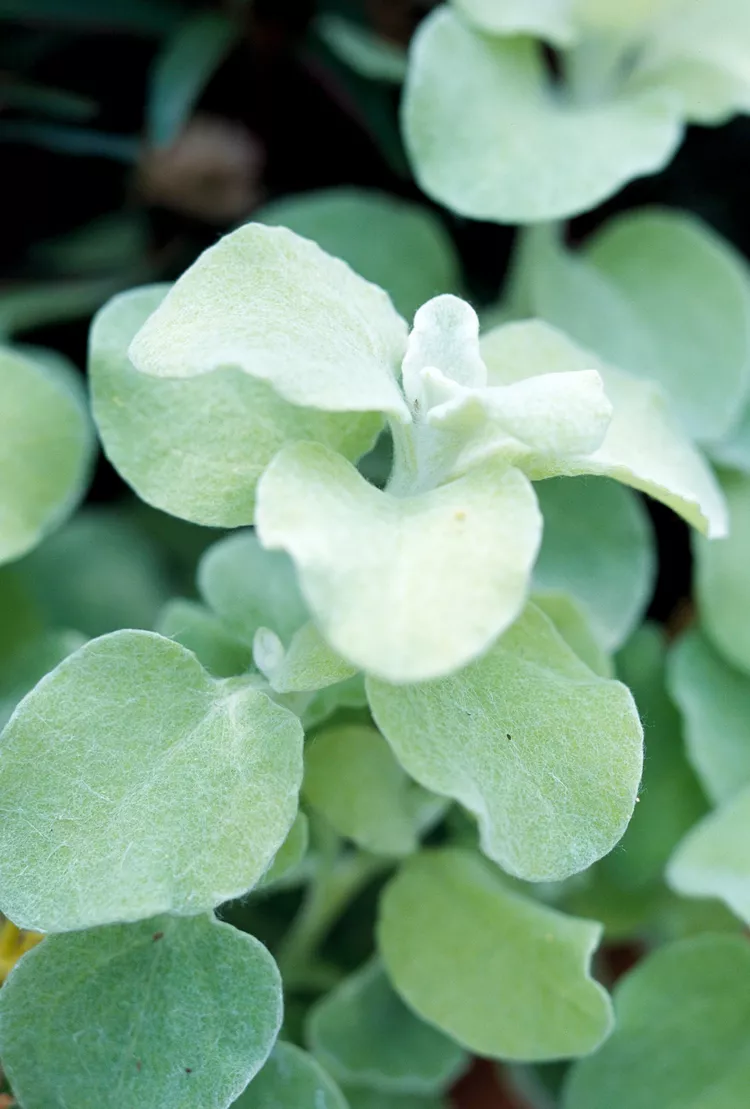
Licorice plant (Helichrysum petiolare spp.) is characterized by its small leaves and thin stems, but it’s much tougher than it looks. The trailing plant thrives in hot, humid weather and tolerates drought well. In the summer heat, licorice plant’s leaves may occasionally project the smell of licorice, hence its common name. Additionally, its fuzzy, scented foliage prevents pests from bothering the plant.
While the softly textured foliage of licorice plant serves a protective purpose, it also adds a fun sensory element to any garden. Dense white hairs cover all parts of the plant, tempting curious kids and adults alike to feel its soft texture. Licorice plant’s pale coloring is also a product of its fuzz—generally, licorice plant comes in silver or white, but it can also be found in soft hues of green, gold, or variegated foliage. Because it’s a perennial, licorice plant won’t bloom unless you live in a tropical environment and can overwinter it. When the plant does bloom, it displays small white flowers.
Licorice Plant Overview
| Genus Name | Helichrysum |
| Common Name | Licorice Plant |
| Plant Type | Annual, Perennial |
| Light | Part Sun, Sun |
| Height | 1 to 3 feet |
| Width | 1 to 2 feet |
| Flower Color | White |
| Foliage Color | Blue/Green, Chartreuse/Gold, Gray/Silver |
| Special Features | Good for Containers, Low Maintenance |
| Zones | 10, 11, 9 |
| Propagation | Division, Seed, Stem Cuttings |
| Problem Solvers | Deer Resistant, Drought Tolerant, Groundcover, Slope/Erosion Control |
Where to Plant Licorice Plant
While it’s most commonly grown as an annual, licorice plant is a woody tropical perennial that is winter hardy in Zones 9–11. In the rest of the country, plant it as an annual or in a container that can be moved inside when cold temperatures descend. Licorice plant works well at the front of sunny beds and borders and can be planted on slopes for erosion control. It is also a good choice for containers and hanging baskets.
Invasive Plant
Be careful when planting licorice plant in the warmest zones of the United States—it can reseed and become mildly invasive. If that is a problem in your region, removing licorice plant’s flowers helps keep it under control. In California, licorice plant has been declared invasive and should not be planted.
How and When to Plant Licorice Plant
To develop a licorice plant that can go into the garden when the weather warms the following spring, plant seeds in late autumn either in a greenhouse or inside your home. Gardeners who prefer to buy nursery plants should put licorice plant in the garden at the same time as tomato plants. If you have a potted licorice plant, you can root stem cuttings in water to be planted outdoors in late spring.
In the garden, dig a hole as deep as your plant’s nursery pot. Remove the licorice plant from the pot and loosen the soil around its roots. Place the plant in the hole and backfill it with soil. When planting multiple licorice plants, space them about 30 inches apart. Water new plants well to settle the soil around the roots and help the plants become established.
Licorice Plant Care Tips
Light
Licorice plant is a fast grower and likes as much sun as possible. In part shade, the plants can become leggy and need pruning to prevent them from looking messy. Also, shade-grown plants don’t look quite as silvery, as the hairs are not as dense when the plant grows in the shade.
Soil and Water
When scouting a spot for licorice plant in your garden, choose an area with well-drained soil. Licorice plant doesn’t like to sit in water, as excess water can cause rot. Once the plant is established, it’s drought-tolerant, although it prefers regular watering.
Temperature and Humidity
Licorice plant grows best in dry, hot environments that receive little rainfall. It doesn’t tolerate frost, so bring it inside before the first frost for overwintering or collect stem cuttings to begin a new crop the following spring.
Fertilizer
Licorice plant tolerates many soil conditions and doesn’t require much fertilizer. If the soil is poor, add compost or organic material to enrich it. Then, a mid-season application of a balanced fertilizer is all the plant needs. Follow product label instructions for proper use.
Pruning
Licorice plant handles pruning well. Give trailing varieties a pinch early in their growth to encourage good branching.
Potting and Repotting Licorice Plant
This plant’s semi-trailing or cascading growth habit works well in containers and hanging baskets. Some varieties have a more upright habit, so if you intend to use the plant as a spiller, check its habit before purchasing. Repot licorice plant yearly in a somewhat large container, being careful not to disturb its roots.
Pests and Problems
The licorice plant is relatively pest-free, but watch for aphids, spider mites, and whiteflies. Neem oil can treat all of these.
Hot, dry weather is licorice plant’s preference—it becomes susceptible to root rot if it's grown in a wet area. Additionally, botrytis can occur when the plant is grown in a region with high humidity or if standing water collects on its leaves.
How to Propagate Licorice Plant
Licorice plant can be propagated by seeds, stem cuttings, or root divisions.
In early spring in all but the warmest zones, prepare licorice plant seeds by soaking them in water for 24 hours. Then, sow the seeds on top of a seed-starting mix, leaving them uncovered. Supply bottom heat at about 68°F. Seedlings should appear two to three weeks later. Wait until the weather warms to set them out in the garden. In Zones 9—11, sow seeds outside in early spring in a full-sun site. Cover them lightly with sand to keep them from blowing away or being eaten by birds.
If you already have a licorice plant, take stem cuttings or root divisions to propagate an exact duplicate of this hybrid plant. Take 6-inch stem cuttings and remove the leaves from the bottom half. Dip the stems into rooting hormone and settle them in a small pot of moist potting soil. Mist the stem cuttings every day, then let a few weeks pass before gently tugging on the propagated plant to determine whether it has rooted.
The easiest way to make more licorice plants is to divide one. Use a sharp shovel and cut a mature plant into four sections, each containing a portion of leaves and roots. Replant the divisions immediately.
Types of Licorice Plant
‘Icicles’
Helichrysum petiolare ‘Icicles’ bears threadlike silvery foliage on upright 2-foot-tall plants. This variation thrives in Zones 9-11.
‘Lemon Licorice’
Helichrysum petiolare ‘Lemon Licorice’ bears silvery-chartreuse foliage and can grow to 2 feet wide in containers. Plant in Zones 9-11.
‘Petite Licorice’
Helichrysum petiolare ‘Petite Licorice’ is a dwarf form with smaller leaves. It grows only about 1 foot wide in Zones 9-11.
‘Silver Mist’
Helichrysum petiolare ‘Silver Mist’ bears small leaves on wiry stems and has an upright, mounding habit. ‘Silver Mist’ thrives in Zones 9-11.
Licorice Plant Companion Plants
Angelonia
Angelonia is also called summer snapdragon, and you’ll understand why when you get a good look at it. The plant has salvia-like flower spires that reach 1–2 feet high, which are studded with fascinating snapdragon-like flowers in purple, white, and pink colorations. It’s the perfect plant for adding bright hues to hot, sunny spaces.
This tough plant blooms all summer. While all varieties are beautiful, keep an eye out for its sweetly scented selections. Most gardeners treat angelonia as an annual, but it can also be grown as a tough perennial in Zones 9-10. If you have a bright, sunny spot indoors, you can keep it flowering all winter.
Gerbera Daisy
Gerbera daisies are so perfect they hardly look real. The idyllic plant blooms in nearly every color (except true blues and purples) and produces large flowers on long, thick, sturdy stems. Gerbera daisies last around a week or more in a vase, making them a favorite of flower arrangers.
This tender perennial survives the winter only in the country’s warmest areas, specifically Zones 9-11. In the rest of the country, the gerbera daisy grows as an annual. It does well in average soil that’s kept evenly moist but not overly wet. Fertilize lightly.
Ornamental Pepper
Heat up your garden with ornamental pepper. Much like hot peppers you would grow in the vegetable garden, ornamental peppers produce colorful little fruits that are round or pointed. These are so attractive in their own right that they can be grown just for show—not for eating. Although the peppers are edible, their flavor is lackluster compared to peppers grown for the table.
Depending on the variety, ornamental peppers appear in shades of white, purple, red, orange, and yellow—often with multiple colors on the same plant. They like rich, well-drained soil that is evenly moist.