When and How to Prune Rosemary for Healthier Plants
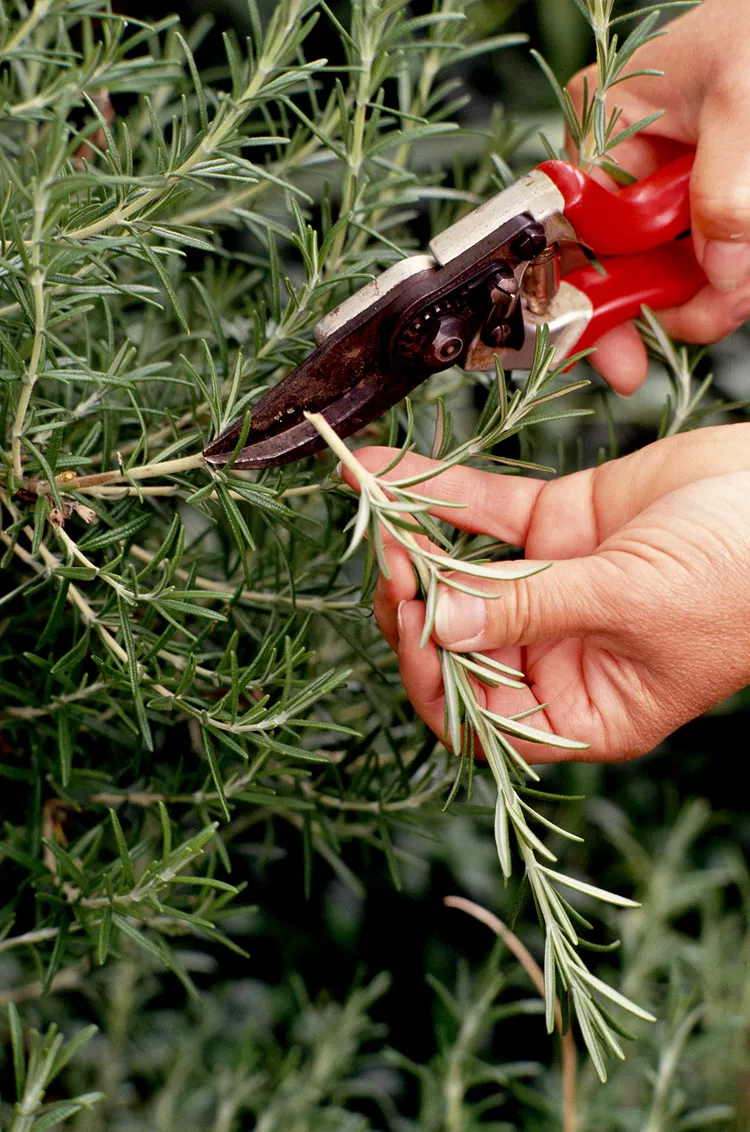
Annual rosemary is often planted in cool climates, but the herb more commonly grows as a perennial in warmer areas. With proper care, perennial rosemary plants grow into large, 6-foot-tall shrubs that live upward of 30 years. Properly pruning rosemary is essential to nurture plants that thrive for decades. Without pruning, rosemary becomes woody and leggy, which looks unruly and yields less useable leaves. Knowing when and how to prune rosemary will help you get the most out of this popular herb.
Why Prune Rosemary?
Like lavender, rosemary only produces leaves and flowers on new growth, and pruning at least once a year is how the herb is encouraged to rejuvenate. If rosemary plants aren't pruned regularly, they become overgrown and woody or develop unsightly bald patches. Pruning rosemary is the best way to harvest lots of fresh rosemary for cooking and drying, and it also leaves you with cuttings for propagation.
Beyond this, pruning opens up the center of rosemary plants, which increases airflow and helps prevent fungal diseases like powdery mildew and botrytis. Additionally, pruning allows you to reshape rosemary plants into classic rounded topiaries, tidy hedges, and other aesthetically pleasing garden forms.
When to Prune Rosemary
Rosemary should be pruned at least once a year, but you may need to prune it more often if you live in a warmer climate where rosemary growth is rapid. The best time to prune rosemary is in spring or early summer immediately after the plant’s flowers begin to fade.
Rosemary can also be pruned later in the season, but avoid pruning it too late in the year, as new growth needs some time to harden off before winter. If you prune rosemary in autumn, complete the process at least six weeks before your area's first frost is expected.
While mature rosemary plants usually need the most pruning, it’s a good idea to start early and prune young plants during their first year. Young rosemary is easy to shape into new forms, and pruning young plants makes them much bushier.
How to Prune Young Rosemary Plants
Whether you’re growing rosemary as an annual herb or you purchased a new plant and want to shape it for optimal growth, pruning rosemary while it's young is always a good idea. It’s important to be precise when pruning young rosemary plants, as your pruning cuts form the foundation of the shrub as it grows.
How to Prune Rosemary for Harvesting
If you want to reshape young rosemary plants and encourage them to grow more stems for harvesting, prune the plants in spring to early summer by snipping away the tips of the stems and shaping your plant as you go. Only cut the top 3 to 6 inches of your plant’s stems, and never cut into the plant’s woody growth. If you want to harvest rosemary for eating, the tender stems are also the most flavorful, and you’ll get the best taste if you pick them right before they flower.
How to Prune Rosemary for Landscaping
Young rosemary can be worked into many creative shapes and topiary forms. For a classic, mounded shape, cut the stems a bit shorter at the top and bottom of the plant and allow them to grow longer at the plant’s center. For a bushier look, cut right above a set of leaves or nodes, which will cause your plant to branch out at that point.
How to Prune Rosemary Grown as a Houseplant
If you grow rosemary indoors as a houseplant, prune it in spring by making cuts with scissors or pruners just above a set of leaves on a stem. Remove dead stems when they occur.
How to Propagate Young Rosemary
Young, tender stems are easiest to propagate into new plants, so save a few cuttings to make more rosemary plants. Dip the cut end of the rosemary stems in rooting hormone and plant them in a rich, moist potting mix until they root.
How to Prune Older Rosemary Plants
Large, mature, or overgrown rosemary plants usually require a bit more pruning than young ones, but the process shouldn’t take much time, and it’s a great way to improve your plant’s health and appearance. Follow these tips for how to prune rosemary safely and effectively.
Clean Your Tools
Before making any cuts on your rosemary plants, always disinfect your tools. Plant diseases can easily spread during pruning, but you can prevent this by wiping your tools with isopropyl alcohol as you move from plant to plant. It’s also smart to sharpen your tools to ensure they make the cleanest cuts.
Inspect the Plant
Take a good look at your rosemary and notice where the newer, leafy stems end and the woody section of the plant begins. Like many other woody-stemmed herbs, rosemary will not produce leaves on old wood, so don’t prune into the woody sections of your plant, as these areas will usually not regrow.
Remove Broken or Diseased Stems
Using pruners or loppers, snip away any damaged, diseased, or broken sections of your rosemary. If branches were damaged during winter, cut below the damaged areas. You generally don’t want to cut into the woody sections of rosemary, but dead growth and woody stems that are growing into each other should be pruned to open up the center of the plant and improve airflow.
Make the Cuts
After pruning back any damaged areas of the plant, begin pruning the actively growing rosemary stems by gathering them in one hand and cutting them back at a 45-degree angle with pruners, loppers, or shears. Work around the plant until your rosemary is shaped to your liking.
Avoid cutting away more than one-third of your rosemary—over-pruning can cause the plant to die. Also, leave at least 3 to 4 inches between your cuts and where the woody section of the plant begins so you don’t accidentally create bald patches.
Shape the Rosemary
If you like the look of a rounded rosemary shrub, prune the stems a bit shorter around the plant’s perimeter. Rosemary can also be pruned into topiaries, hedges, or other unique shapes depending on your gardening style and pruning technique.
Repeat, If Necessary
Often, rosemary plants only need to be pruned once a year, but plants with vigorous growth may need to be pruned more frequently. Just remember that you should stop pruning rosemary at least six weeks before frost arrives so that new growth isn’t damaged by cold weather.
Can Woody Rosemary Be Saved?
Pruning rosemary at least once a year prevents plants from becoming overgrown and woody. When these herbaceous shrubs become woody, they’re hard to rejuvenate, so growers usually opt to replace the plants instead. However, with patience and care, you may be able to rehabilitate a woody rosemary plant. Just keep in mind this process isn’t always successful.
How to Rejuvenate Woody Rosemary
To rejuvenate woody rosemary, it’s best to focus on one section of the plant at a time, allowing it to recover for several months before pruning the next section. When pruning old plants, cut the stems back just a few inches above where the woody part of the plant begins. Also, never remove more than one-half of the plant’s stems at once, as overly vigorous pruning can cause rosemary to stop growing altogether.