How to Plant and Grow Chives

29.6K
2.7K
851
2025-11-14
How to Plant and Grow Chives

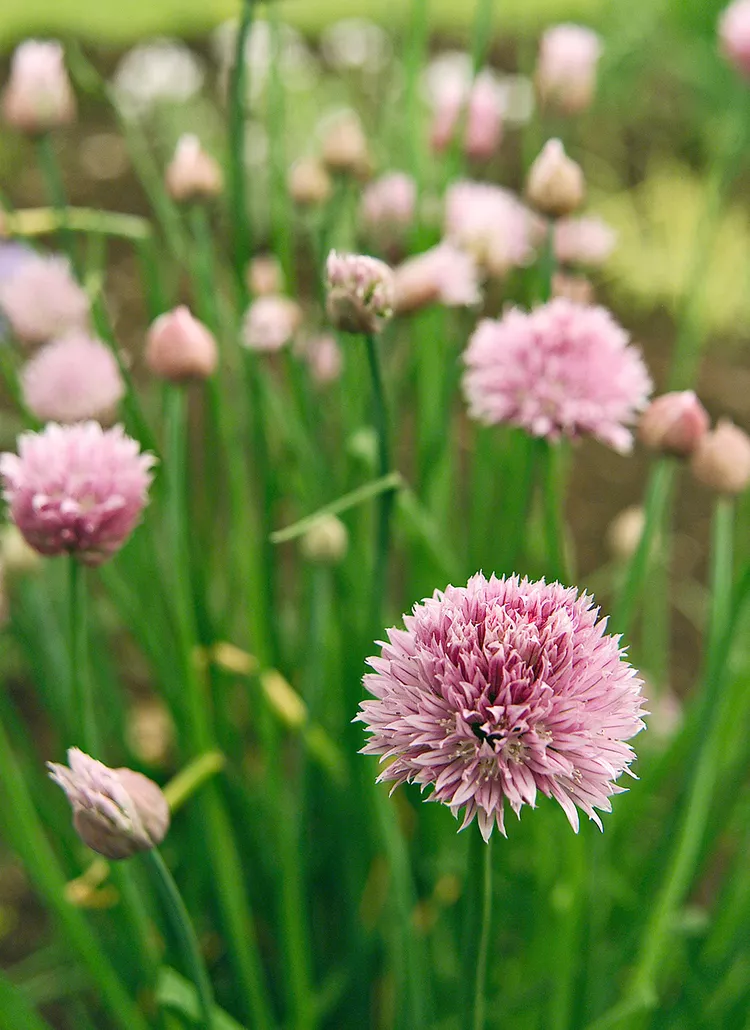
Grown and known for its onion-like taste, chives add fresh flavor to cuisines of all types. Both the foliage—slender, bright green leaves—and the flowers—purple pom-pom blooms—are edible. Chives grow slowly and self-seed, popping up around the garden. Volunteers are easy to remove; they make welcome gifts for anyone who would like to plant chives in a pot or in the yard.

Chives Overview

Genus Name Allium schoenoprasum
Common Name Chives
Plant Type Herb, Perennial
Light Part Sun, Sun
Height 6 to 18 inches
Width 8 to 12 inches
Flower Color Pink
Season Features Summer Bloom
Special Features Good for Containers, Low Maintenance
Zones 10, 3, 4, 5, 6, 7, 8, 9
Propagation Division, Seed
Problem Solvers Deer Resistant

Where to Plant Chives

Chives thrive in full sun and well-drained soil rich in organic matter with a slightly acidic to neutral pH.

Plant them alongside other perennial herbs that also thrive in full sun, such as sage, thyme, French tarragon, and lavender. Chives are so pretty that you don’t need to confine them to an herb garden. Try planting them in perennial beds or along walkways. Or add the plant to container gardens where it will produce fresh new foliage from spring to frost. 

How and When to Plant Chives

Plant chives in the spring after the last frost. Dig a hole that is wide enough to fit the root ball and just as deep. Remove the plant from its pot. If the root ball is dense and tight, gently loosen it with your fingers. Place the plant in the hole so that the top of the root ball if flush with the surrounding soil. Backfill with the original soil and tamp the soil firmly with your hand. Water slowly and deeply and keep the plant well-watered in the absence of rain for a few weeks until you see new growth.

Chives Care Tips

Chives are low maintenance and one of the easiest herbs to grow. And they are exceptionally long-lived.

 Light

Chives grow best in full sun. They tolerate part shade well and will grow and blossom when they receive at least 6 hours of bright, direct light.

Soil and Water

Chives should be planted in rich, well-drained soil with a pH between 6.0 and 7.0. If the location has poor drainage, plant them in a raised bed or a pot.

Temperature and Humidity

 A cool-season herb, chives produce their best harvest in the spring and fall. Extreme summer heat can sometimes result in chives going dormant during the middle of the summer. In cool climates, the foliage dies back and the plant goes dormant over the winter. Chives are prone to getting powdery mildew, which is exacerbated by high humidity.

Fertilizer

Like many herbs, chives have the best flavor when they have slow, compact growth. Soil rich in organic matter usually provides all the nutrients chives require. If the soil is low on organic matter, spread a 2-inch-thick layer of compost over each plant's root zone in early spring.

Pruning

To prevent the plants from self-seeding, deadhead them just as the blooms begin to fade, In the spring, remove the dead foliage to make room for new growth.

Potting and Repotting Chives

Chives are great candidates for growing in pots. Use a pot with large drainage holes and fill it with well-draining potting mix. Keep in mind that potted plants need more frequent watering than plants in garden soil.

Because chives grow slowly, repotting to a larger pot with fresh potting soil is only needed every few years. You can also divide the plant instead of planting it in a larger pot.

Pests and Problems

Generally, chives are not often affected by serious pests and diseases. They are susceptible to various fungal diseases, including damping off, where the fungus causes seedlings to die suddenly. Damping off usually occurs in soil that is too wet or overfertilized. Other fungal diseases affecting chives are pink root rot, downy mildew, and powdery mildew. You might also find aphids, mealybugs, and spider mites on your plants.

How to Propagate Chives

Chives need to be divided every three or four years in spring right after new leaves emerge, which is also the easiest way to propagate them (you can also grow them from seed but they are very slow to germinate). Dig up the entire clump. Using a sharp spade, cut it into three or four sections. Replant the sections at the same depth as the original plant.

The alternative to division is to take advantage of the self-seeding habit of chives. Dig up small plants in the spring or summer. Pot them in small plastic pots with potting soil to share with friends and neighbors.

Harvesting

Snip chives with a pair of sharp scissors or kitchen shears, cutting the stems down to 2 inches above the soil. Never pull them out of the ground. Cut leaves that are 7 to 10 inches in length and leave the smaller inner leaves on the plant to mature.

Types of Chives

 Garlic Chives

Garlic chives are exceptionally hardy chives with a mild garlic flavor. The leaves are flat and grass-like. not hollow like onion chives. The plants form slow-expanding clumps of gray-green foliage that stand 1 to 2 feet tall. The leaves feature a mild garlic flavor. Zone 3-9

Staro Chives

The cultivar Allium schoenoprasum 'Staro' has the flavor of mild, sweet onion. The leaves are thicker than other chives, which makes them especially suitable for freezing and drying. The plants grow 12 to 18 inches tall. Zone 3-9

Dolores Chives

Allium schoenoprasum 'Dolores' has fine, slender leaves, The plant has an upright growth habit and reaches 12 to 18 inches in height. Zone 3-9

Garden Plans For Chives

Classic Herb Garden Plan

This classic herb garden plan ensures your kitchen is always stocked with fresh herbs. Ten kinds of herbs surround a decorative sundial in a 6-foot-diameter bed.

Colorful Herb Garden Plan

Get an herb garden that dazzles with this colorful plan, where a 3x8-foot border features foliage with purple, green, and golden hues—including variegated leaves.
Frequently Asked Questions

  • Should I let my chives flower?

    Yes and no. If you plan to use the flowers for dishes or bottle them in vinegar for a lovely pink-tinted brew, let them flower. Otherwise, cut any leaves with flower buds as soon as you notice them. Those leaves are tough and not very palatable.

  • Can I grow chives indoors?

    You can grow chives indoors, either year-round or to overwinter potted chives that have spent the summer outside. Put them in a south-facing window where the plant receives at least 4 to 6 hours of direct sunlight per day. Alternatively, you can also place them under grow lights.

Related Article

The 12 Best Terrarium Plants to Grow in Your Miniature Garden
13.2K
794
349

The 12 Best Terrarium Plants to Grow in Your Miniature Garden

These small, humidity-loving terrarium plants are perfect for growing in mini indoor gardens.
How to Grow and Care for Living Stones
19.4K
1.9K
388

How to Grow and Care for Living Stones

Find out how to grow living stones, unique miniature succulents that look like pebbles. This guide covers how to care for living stone plants, including watering them just right to keep them thriving.
How to Grow and Care for a Coffee Plant Indoors
16.7K
832
282

How to Grow and Care for a Coffee Plant Indoors

Learn how to grow a coffee plant indoors, including tips on light, humidity, watering, and pot size. This houseplant will add a tropical touch to your home with its glossy green leaves.
How to Grow Air Plants That Don’t Need Soil to Survive
44.8K
2.2K
425

How to Grow Air Plants That Don’t Need Soil to Survive

Learn how to grow air plants and how to care for them with the right amount of sunlight and water.
Is Misting Your Plants as Good as Watering Them?
38.3K
2.7K
1.1K

Is Misting Your Plants as Good as Watering Them?

Misting plants is all over social media, thanks to the popularity of pretty plant misting bottles. But does misting or spritzing give your plants enough water? We talked to experts about whether misting houseplants gives them the care they need.
How to Grow and Care for a Money Tree Indoors
2.7K
134
48

How to Grow and Care for a Money Tree Indoors

Money trees make beautiful, easy-care houseplants. Use this guide to grow a money tree indoors.
After No Mow May, Should You Do a Slow Mow Summer?
23.7K
1.7K
564

After No Mow May, Should You Do a Slow Mow Summer?

Here's why you may want to practice a Slow Mow Summer, which focuses on mowing less area less often to help pollinators and the environment.
How to Landscape Front Yards and Entryways to Maximize Curb Appeal
18K
179
42

How to Landscape Front Yards and Entryways to Maximize Curb Appeal

Try our simple tips for how to landscape front yards to boost the visual appeal of the most visible part of your garden and home.
How to Plant and Grow Saffron
12.9K
516
170

How to Plant and Grow Saffron

Saffron is an expensive spice harvested from an easy-to-grow type of crocus bulb. Here's what you need to know about growing saffron.
Our Best Tips for Creating Beautiful Fall Window Boxes
24.2K
2.4K
435

Our Best Tips for Creating Beautiful Fall Window Boxes

When autumn is in the air, it's time to transition from summer to fall window boxes. Take a hint from mother nature with these perfect color combos.
6 Must-Know Tips on Mandevilla Care in Pots to Keep the Flowers Coming All Summer
38.1K
3.1K
701

6 Must-Know Tips on Mandevilla Care in Pots to Keep the Flowers Coming All Summer

Mandevilla care in pots is a little different than growing these gorgeous summer-blooming plants in the ground. Use these tips to keep your potted mandevilla plant thriving and flowering all season.
19 Colorful Window Box Ideas to Brighten Up Your Exterior
9K
897
197

19 Colorful Window Box Ideas to Brighten Up Your Exterior

Use these window box ideas for a no-fail way to dress up your home. We share the right plant combinations to create maximum curb appeal.
How to Make a Hanging Basket for Your Front Porch or Patio
7.6K
302
48

How to Make a Hanging Basket for Your Front Porch or Patio

Learn how to make a hanging basket that will grow and add color and life to your front porch. Hanging baskets are a lovely way to welcome guests.
How to Plant and Grow a Tree Tomato (Tamarillo)
12.4K
745
283

How to Plant and Grow a Tree Tomato (Tamarillo)

Find essential tips for growing the tree tomato, or tamarillo, an unusual plant grown for its egg-shaped, flavorful fruit.
How to Fill a Raised Garden Bed: 3 Affordable Methods
11.8K
940
310

How to Fill a Raised Garden Bed: 3 Affordable Methods

Discover how to fill a raised garden bed using 3 simple options that can help you save money on soil.
8 Steps to Fix a Lawn That’s All Weeds and Bare Patches
36.7K
733
351

8 Steps to Fix a Lawn That’s All Weeds and Bare Patches

Give your lawn the TLC it needs to grow lush, green grass. If it’s time for grass replacement, we’ve got you covered. Use our step-by-step guide, from figuring out the problem to proper care for your new lawn.
How Often Should You Mow Your Lawn? 8 Tips to Time It Right
44.3K
3.5K
956

How Often Should You Mow Your Lawn? 8 Tips to Time It Right

How often you should mow your lawn depends on factors such as type of grass and weather. These tips will help you figure out how frequently to mow for a lush, healthy lawn.
How to Use Compost: 9 Ways to Give Your Plants a Boost
27.1K
811
202

How to Use Compost: 9 Ways to Give Your Plants a Boost

Control weeds, grow healthier plants, and feed your lawn with nutrient-rich compost. From houseplants to vegetable gardens, here are 9 top ways to use compost on all your plants.
How to Choose the Best Type of Grass for Your Lawn
47.1K
470
89

How to Choose the Best Type of Grass for Your Lawn

The correct type of grass can mean the difference between a constant struggle to keep your grass green and season-long beauty and enjoyment.
How to Build a Raised Garden Bed for Easier Veggie or Flower Planting
15K
300
36

How to Build a Raised Garden Bed for Easier Veggie or Flower Planting

Learn how to build a raised garden bed with our step-by-step guide, including all the supplies you'll need. This DIY project is easy to do.