8 Steps to Fix a Lawn That’s All Weeds and Bare Patches
36.7K
733
351
2025-10-24
8 Steps to Fix a Lawn That’s All Weeds and Bare Patches

Could your lawn use an overhaul? If you’ve got more weeds than grass and nothing you do seems to improve all the bare patches, it may be time to take things back to square one. Use this step-by-step guide to give your grassy areas a fresh start.

01 of 08

Diagnose the Lawn Problem

Before fixing a lawn, step back and look at the big picture. Take a moment to figure out the issue to help you avoid similar issues after replanting. For example, if grubs are the problem, you’ll need to treat for them before anything else.

If your grass is suffering because there’s too much shade in parts of your yard, you’re better off replacing lawns that require sun in those areas with low-maintenance ground covers that thrive in the shade instead. Or consider adding landscaping features like a fire pit where grass struggles to grow. That will have the added benefit of cutting down the mowing needed.

02 of 08

Give Your Lawn a Fresh Start

Start from scratch if more than half of your lawn is screaming for help. Spray your existing grass with a non-selective herbicide, which will kill all vegetation it touches. Make sure to read and follow all directions on the label to avoid damaging nearby non-target plants or harming wildlife.

03 of 08

Mow the Lawn Low

Once the herbicide has had a few days to work, mow the dead turf as short as possible. It may seem counter-intuitive that completely scalping a lawn is a step in fixing a lawn, but this low mowing will keep the dead plants from shading your new lawn too much while leaving the remains of their roots intact to prevent erosion until fresh grass can grow.

04 of 08

Rake, Rake, Repeat

Next step in grass replacement? Visit your local rental center and get a power rake (The Home Depot sometimes has a few available to rent in your area!). Don’t worry; it’s not as complicated as it sounds (many models are as easy to handle as the average lawnmower). Ask the clerk to show you how to adjust the blades to save yourself frustration.

Power raking will remove excess organic material and aerate the soil, allowing your new lawn to take root. You want to leave just the barest layer (about 1/4 inch) of thatch on the ground. Then rake off the remaining debris. You’ll know you’ve raked enough when you see equal amounts of bare soil and dead grass stems. Then spread a thin layer of compost over the soil and rake it in evenly.

05 of 08

Seed the Lawn

Now it’s time to plant new grass. If you’re using seed, follow the instructions on the package to determine how much you’ll need to use. Planting the right amount of seeds is important because your lawn could turn out thin and scraggly if you don’t use enough. To uniformly apply the seed, spread half in a north/south direction, then apply the other half in an east/west direction (you’ll be less likely to end up with bare spots).

If you’re installing sprigs or plugs, it’s just a matter of digging little holes and plopping the plants in place. Cut a small trench for sprigging and use a sod plugger for plugs. You can usually buy this where you purchased the plugs.

06 of 08

Water Your New Lawn Well

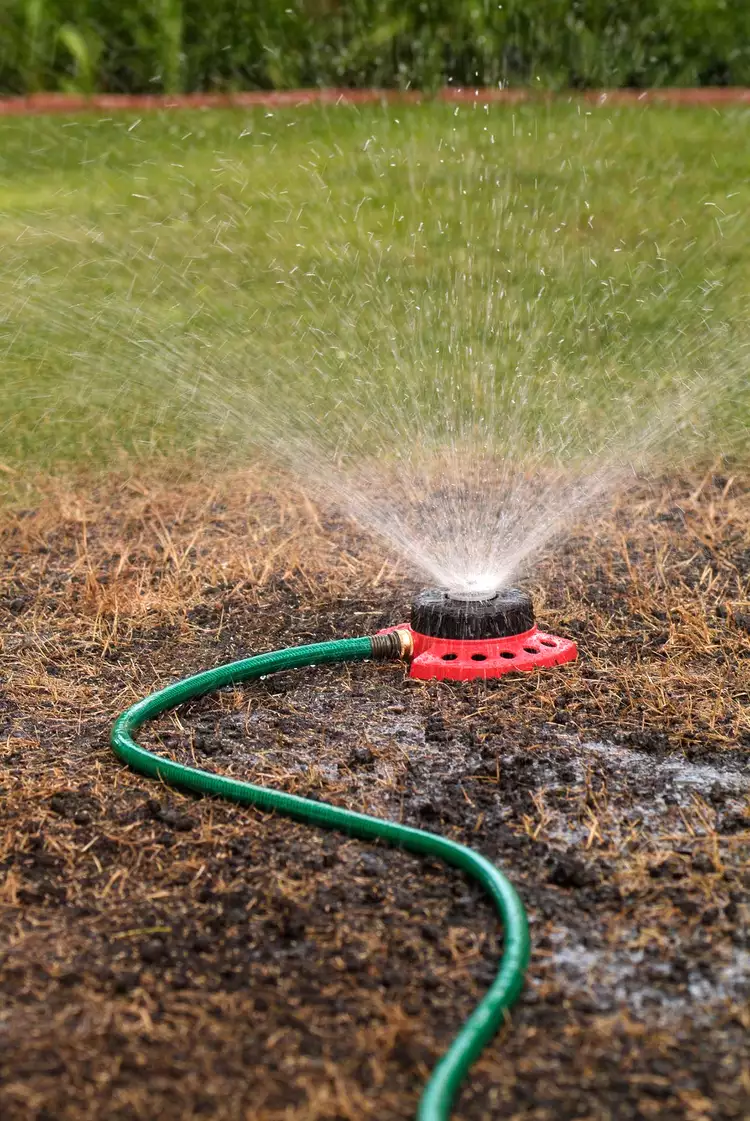
Once everything’s planted, you’ll need to keep your renovated lawn moist. For the first week or so after planting, be sure the soil doesn’t go dry. Then, after the grass is up and growing, keep the area just moist (not soggy or dry). This may mean watering a couple of times a day early on (for short, five-minute applications). Over time, you can go to a once-a-day watering for 10 or 15 minutes. It’s also crucial to water evenly, so your seed doesn’t wash away, creating bare spots.

07 of 08

Feeding Your Renovated Lawn

When the grass shoots are about an inch tall, you can apply a lawn fertilizer to encourage growth (you can also skip the fertilizer and try an organic lawn care option like compost). The same goes for sprigs and plugs: After seeing a couple of new shoots, it’s time for fertilizer if you want to use it. Just be sure to wait until there’s growth because you can burn roots if you fertilize too early.

08 of 08

Start Mowing Your New, Repaired Lawn

When the grass is about three inches tall, mow it for the first time. This will discourage weeds and encourage the spread of your new grass. This simple step makes a huge difference in the success of replacing lawns!

Be sure the mower blade is sharp the first time you mow; a dull blade could rip the seedlings from the ground. Then mow as you usually would to keep the grass at the height you want it. For the health of your turf, don’t cut off more than a third of the leaf length during any one mowing.

Related Article

The 12 Best Terrarium Plants to Grow in Your Miniature Garden
13.2K
794
349

The 12 Best Terrarium Plants to Grow in Your Miniature Garden

These small, humidity-loving terrarium plants are perfect for growing in mini indoor gardens.
How to Grow and Care for Living Stones
19.4K
1.9K
388

How to Grow and Care for Living Stones

Find out how to grow living stones, unique miniature succulents that look like pebbles. This guide covers how to care for living stone plants, including watering them just right to keep them thriving.
How to Grow and Care for a Coffee Plant Indoors
16.7K
832
282

How to Grow and Care for a Coffee Plant Indoors

Learn how to grow a coffee plant indoors, including tips on light, humidity, watering, and pot size. This houseplant will add a tropical touch to your home with its glossy green leaves.
How to Grow Air Plants That Don’t Need Soil to Survive
44.8K
2.2K
425

How to Grow Air Plants That Don’t Need Soil to Survive

Learn how to grow air plants and how to care for them with the right amount of sunlight and water.
Is Misting Your Plants as Good as Watering Them?
38.3K
2.7K
1.1K

Is Misting Your Plants as Good as Watering Them?

Misting plants is all over social media, thanks to the popularity of pretty plant misting bottles. But does misting or spritzing give your plants enough water? We talked to experts about whether misting houseplants gives them the care they need.
How to Grow and Care for a Money Tree Indoors
2.7K
134
48

How to Grow and Care for a Money Tree Indoors

Money trees make beautiful, easy-care houseplants. Use this guide to grow a money tree indoors.
After No Mow May, Should You Do a Slow Mow Summer?
23.7K
1.7K
564

After No Mow May, Should You Do a Slow Mow Summer?

Here's why you may want to practice a Slow Mow Summer, which focuses on mowing less area less often to help pollinators and the environment.
How to Landscape Front Yards and Entryways to Maximize Curb Appeal
18K
179
42

How to Landscape Front Yards and Entryways to Maximize Curb Appeal

Try our simple tips for how to landscape front yards to boost the visual appeal of the most visible part of your garden and home.
How to Plant and Grow Saffron
12.9K
516
170

How to Plant and Grow Saffron

Saffron is an expensive spice harvested from an easy-to-grow type of crocus bulb. Here's what you need to know about growing saffron.
Our Best Tips for Creating Beautiful Fall Window Boxes
24.2K
2.4K
435

Our Best Tips for Creating Beautiful Fall Window Boxes

When autumn is in the air, it's time to transition from summer to fall window boxes. Take a hint from mother nature with these perfect color combos.
6 Must-Know Tips on Mandevilla Care in Pots to Keep the Flowers Coming All Summer
38.1K
3.1K
701

6 Must-Know Tips on Mandevilla Care in Pots to Keep the Flowers Coming All Summer

Mandevilla care in pots is a little different than growing these gorgeous summer-blooming plants in the ground. Use these tips to keep your potted mandevilla plant thriving and flowering all season.
19 Colorful Window Box Ideas to Brighten Up Your Exterior
9K
897
197

19 Colorful Window Box Ideas to Brighten Up Your Exterior

Use these window box ideas for a no-fail way to dress up your home. We share the right plant combinations to create maximum curb appeal.
How to Make a Hanging Basket for Your Front Porch or Patio
7.6K
302
48

How to Make a Hanging Basket for Your Front Porch or Patio

Learn how to make a hanging basket that will grow and add color and life to your front porch. Hanging baskets are a lovely way to welcome guests.
How to Plant and Grow a Tree Tomato (Tamarillo)
12.4K
745
283

How to Plant and Grow a Tree Tomato (Tamarillo)

Find essential tips for growing the tree tomato, or tamarillo, an unusual plant grown for its egg-shaped, flavorful fruit.
How to Fill a Raised Garden Bed: 3 Affordable Methods
11.8K
940
310

How to Fill a Raised Garden Bed: 3 Affordable Methods

Discover how to fill a raised garden bed using 3 simple options that can help you save money on soil.
8 Steps to Fix a Lawn That’s All Weeds and Bare Patches
36.7K
733
351

8 Steps to Fix a Lawn That’s All Weeds and Bare Patches

Give your lawn the TLC it needs to grow lush, green grass. If it’s time for grass replacement, we’ve got you covered. Use our step-by-step guide, from figuring out the problem to proper care for your new lawn.
How Often Should You Mow Your Lawn? 8 Tips to Time It Right
44.3K
3.5K
956

How Often Should You Mow Your Lawn? 8 Tips to Time It Right

How often you should mow your lawn depends on factors such as type of grass and weather. These tips will help you figure out how frequently to mow for a lush, healthy lawn.
How to Use Compost: 9 Ways to Give Your Plants a Boost
27.1K
811
202

How to Use Compost: 9 Ways to Give Your Plants a Boost

Control weeds, grow healthier plants, and feed your lawn with nutrient-rich compost. From houseplants to vegetable gardens, here are 9 top ways to use compost on all your plants.
How to Choose the Best Type of Grass for Your Lawn
47.1K
470
89

How to Choose the Best Type of Grass for Your Lawn

The correct type of grass can mean the difference between a constant struggle to keep your grass green and season-long beauty and enjoyment.
How to Build a Raised Garden Bed for Easier Veggie or Flower Planting
15K
300
36

How to Build a Raised Garden Bed for Easier Veggie or Flower Planting

Learn how to build a raised garden bed with our step-by-step guide, including all the supplies you'll need. This DIY project is easy to do.